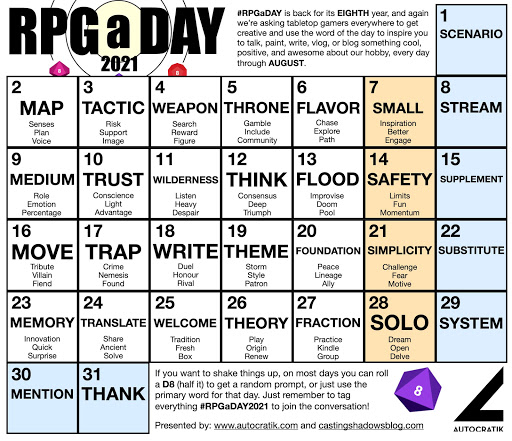
Oh come on. With how big of a Star Trek fan I am you’d think I’d pass up on “Engage”? Captain Picard’s catch-phrase when sending the USS Enterprise (NCC-1701-D) into warp. It even got to the point where other commanding officers attempted to try to find a good catch-phrase to jump into warp.
Starships from Star Trek have always been one of my passions. Collecting technical manuals, blueprints, and posters detailing the vast number of starships seen on the show. I’ve even earned the mantel of “Treknologist” when a co-worker brought me a name plate with that title for my office. Years later it now hangs on the wall in my Geek Den.
Back in the early 1990’s when I was collecting all of the FASA Star Trek role playing books, I loved how the Starship Tactical Combat Simulator worked. I was able to compare how different starships stacked up against each other. I gathered photo copies of all the starships I could find from the official guides, the rulebooks, the modules, magazine articles and fanzines into one big three-ringed binder. Even after findings all of these ships and their stats, I wanted more. Luckily FASA created the Starship Construction Manual. With this book I was able to create homebrewed stats for some of the starships that I had in my book and blueprint collection. I recently found this three-ringed binder and I started to scan my original documents into PDF format. You can see the previous scans Here, Here, Here, Here and Here.
There was one starship in my three-ringed binder that I created from scratch. One of the minor governments in the FASA lore was the Affiliation of Outer Free Worlds. Basically it was a mini-Federation found within the Triangle region. A lot of ex-Starfleet officers found employment in the AOFW Space Navy. The only vessel I found for my book came from a Stardate Magazine and it displayed that they used Federation based equipment. So I created the Emerald Class VII Scout. For the image, I quite literally cut-and-paste the top off of a Federation (Upgraded) Class Dreadnought for the images and used the assembly rules from the Starship Construction Manual. Here is the PDF for download.
“Small” as a primary suggestion for a topic made me raise an eyebrow. Yes, Haflings are small. But I wasn’t moved to use small as a subject. I could see some options for “Inspiration” but it had the bad luck of being on the same day as Engage. “Better”? Again not very inspiring. There were a few days like this that the bulk of suggestions were lacking.
Last month I posted that I had found an old three-ring binder that I had kept character sheets in from different role-playing games. Here are a few more character sheets that I wanted to share.
Doctor Who Character Sheet for Christopher Floyd.
I remember playing the Doctor Who Role Playing Game by FASA in the late 80’s and early 90’s. There was a group of friends who use to hang out at Comic Utah and watch Doctor Who episodes on the local PBS affiliate, KUED Ch. 7. On the back of this sheet I had written down an inventory list for Christopher Floyd (yea it was a play on the Christopher Lloyd name). His inventory included a trench coat, an adventures hat, a briefcase, a personal word-processor computer, lots of notes, two books he had written (he was an author turned adventurer to be inspired to write future novels), a flashlight, a snubnose .22 pistol with ammo, a drawing pad and several RPG books. While I remember the friends I played with, I don’t recall much of the campaign beyond attempting to hack an alien computer system with my personal computer.
Doctor Who Character Sheet for Jacob Stine.
I remember making this character with the thought that Jacob Stine would have been a member of the underworld. Infiltration, assassination, burglary, etc. Like Christopher Floyd, I had his equipment written on the back of the sheet. Weapons, blacksuit, explosives, etc. I don’t recall if I had a chance to play this character, but I believed I used him as an NPC for a Doctor Who RPG that I ran.
I’ll be getting more character sheets scanned and posted soon.
I’ve had a chance to scan in a few more homebrewed stats from different tech resources. These are starships for FASA’s Star Trek Starship Combat Simulator. We are now in the Frigates used by Starfleet and start with the transports.
One of the favorites of Tech Fandom. This Coventry class was pulled from the black covered Ships of The Starfleet Volume One (published in 1987). I thought that this design would have seen action during the Four Years War.
This ships also came from the Ships of The Starfleet Volume One. I believe I also saw vessels of this class make an appearance in the second run of Star Trek Comics by DC Comics.
I don’t recall the source for this ship and stats. I want to go back and double check it again against the source material however. While I was scanning it, I was wondering if the 5000 passenger number was correct.
While the Knox Class was in the Ships of The Starfleet Volume One, I pulled the image and stats from a different source (probably the same as the Hippocrates Class listed above). I wonder if the stats would have been vastly different if I had pulled the info from SoSv1?
Another starship from the Franz Joseph Star Fleet Technical Manual. I created the back story about the Four Years War and the namesake. This was another case of not knowing who Ptolemy was and not having the modern google tools that I can use now.
I’ve had a chance to scan in a few more homebrewed stats from different tech resources. These are starships for FASA’s Star Trek Starship Combat Simulator. We finish up the Federation destroyers and move into some unusual starships.
Off the top of my head, I’m not certain which source I used for this starship. I recognize the artwork, but not the book. I’ll have to see if I can find it so I can give it proper credit. It is another member of the upgraded Saladin family.
This also came from the same source as the Thunderbolt. It is also another variant of the upgraded Saladin class. This type of kitbash was very popular in the original source material.
This design came from the fan-made Starfleet Prototype: The Journal of Innovative Design and Ideas. Even though it was listed as “Issue 25 2291-2292”, I don’t know if any others of this journal was released. It is a very well detailed book which has other designs that I have homebrewed, or would like to homebrew.
Found in the Starfleet Dynamics (another excellent fan-made tech publication), the Guam Class was one of the few deck-carriers I had seen. Since FASA’s sources was lacking carriers, I converted this one over and added it to my book.
This starship came from a set of blueprints (also fan made) that I had found on one of my convention trips. I miss the days of going to a con and walking away with another resource book, tech manual or set of blueprints. Again I thought the idea was unique and converted it over.
Another set scanned and uploaded. Keep sending me your feedback. I’ve been enjoying talking with those that enjoyed these types of homebrewing and designs.
I received quite a bit of feedback on my last batch of starships that I have converted to FASA’s Star Trek Starship Combat Simulator. So I’ve sat down and scanned a few more into PDF formats. Once again, these are from the original documents that I created back in the early 90’s with a photocopier and cutting and pasting the images into the documents and then photocopying that document.
Most of these entries are destroyers. In my first entry I selected several ships at random. Starting in my second blog post I started going in order of what I had in the book. I tended to follow the organization that was in the three Starship Recognition Manuals. I’ve got a few more destroyers in the next batch then we will be onto some of the dreadnoughts.
In the original source for this starship, it was called the Ranger Class Cruiser. However FASA already had a Ranger Class. So I renamed it to Starranger. Many years later I’ve noticed that there have been several published designs (both licensed and fan-made) that use the “Ranger Class” name.
I’m not certain what source I got this starship from. In 20/20 hindsight I should have referenced them when I created the document. I thought it was an interesting concept on the Saladin/Hermes family design.
And speaking of the Saladin Class, here it is directly from the Starfleet Technical Manual. When I created this document, I had no idea that Saladin was a real historical figure. I created a backstory for the name and entered it into this starship description. If I was creating this document now, I would update it to properly represent it’s namesake.
This was definitely from a fan-made technical manual. It was probably one that I had borrowed from my fellow Treknologist, Dennis Hollinger. I’ll have to ask him if he remembers which book this was from and post it in a future blog entry.
Another member of the Saladin/Hermes family. I believe this was from one of the Starfleet Academy tech books. I’m still unpacking things so I’ll see if I can track this one down. I know I’ve seen other (better) drawings of the Siva class.
That’s it for this round. I’m also planning to set up a page where all of these can be found in one location. More on that soon.
So I’ve been getting feedback from people who have visited my blog. Thank you. This tells me that others are reading some of the stuff I’ve been posting here. I had several people send me thank you notes for putting together the Character Creation Challenge. I’ve noticed that a few new challenges have started in April displaying the works of different homebrew stats. Unfortunately my April was booked up with some personal issues that prevented me from trying to participate. However seeing creativity inspires creativity so keep it up.
Shane Bradley asked about the ships in my Master Book that I talked about in Homebrewed Stats for Starships Part II. I am still planning to scan the other starships in there that I made when I put the book together back in the 90’s. At this time I just plan to make them into PDFs from the original printouts. Once that is done, then I may consider other tweaking of them. As an example, Shane sent me one of the ships I had presented in Excel format. I’ve linked it here. Thanks Shane.
Mark from from the Xon Gaming website (now hosted by a friend, click on “resources” link at the top) was impressed with the FASA catalogs that I had posted previously. He sent me a better scan of the 1983-2 catalog. It’s a direct scan, not pictures of the pages so it may be easier to read.
This next catalog is the FASA 1986 catalog that someone scanned and sent to me. It is only showing the Star Trek material in the book. However I don’t recall who sent it to me. I’ve looked back through all of my emails and message board posts and I can’t find the person who sent this to me. So sorry, buzz me again and I’ll credit you in a future feedback post. Here is the catalog to share.
Another reader sent me some Star Wars SAGA RPG books that he didn’t want on his shelves any more. This will give me a chance to review the system and see how it differs from the earlier D20 Star Wars books.
I am continuing to search through my past collections for items to post. I was also reading the Dungeons and Dragons Rules Cyclopedia and it inspired me for a possible homebrew to write up.
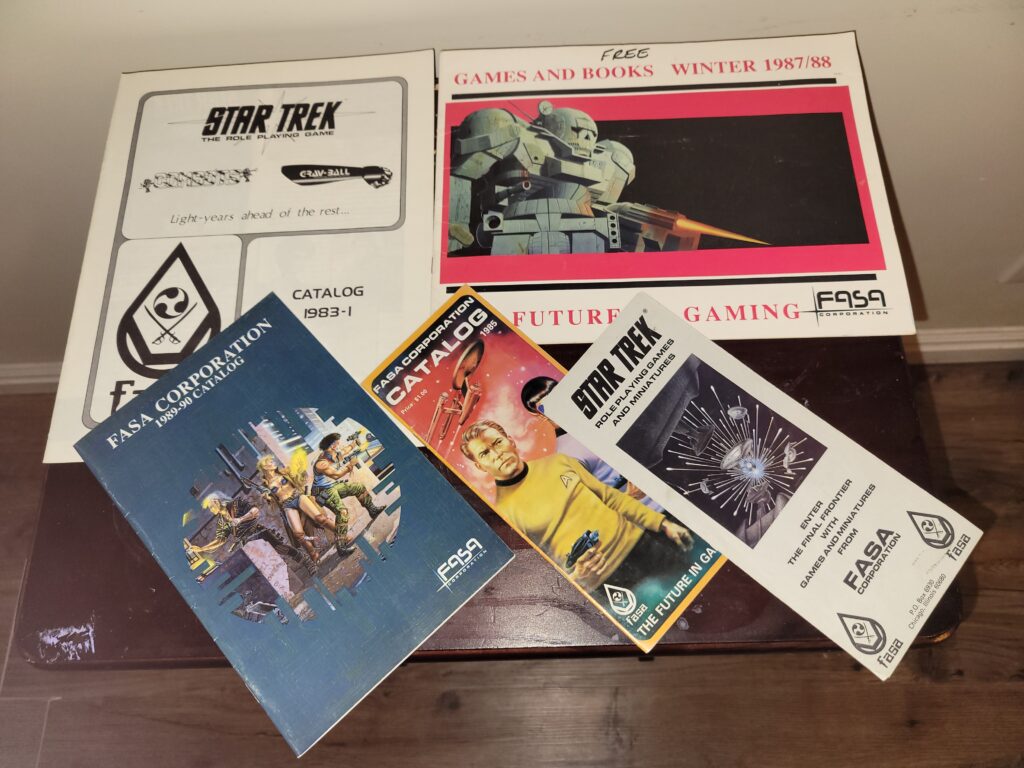
As I’ve been cataloging and organizing my collection, I noticed something. I kept all of the FASA catalogs that I had come across in my attempts to collect all of the Star Trek The Role Playing Game. These free catalogs came with the game itself, or were found at gaming stores in an attempt to generate future sales. Some of these catalogs had information on products that FASA planned to release, but never did for one reason or another.
Because some of these items are starting to get hammered, I decided to scan them into PDF files and then put them away where they would be protected. It is possible that there may be more of these windows into the past still lurking in a box somewhere. If I happen to find any un-scanned catalogs, I will scan them and post them here for all to enjoy (or use in historical research). I’m missing any catalogs from 1984 and 1986.
This catalog came with the 1st edition of FASA’s Star Trek The Role Playing Game boxed set. I’m not certain if they had any catalogs before this one. It was printed on regular paper and stapled in the middle. There were eight pages in total (counting the cover and the order form on the back). The Star Trek RPG was prominently displayed on the first two pages. It listed the basic game boxed set and the 15mm deck plans for the USS Enterprise and the Klingon D-7. It also contained working titles for upcoming supplements and adventures. “Merchants and other Characters” would have been a sourcebook for civilians and traders in the Star Trek universe. This is probably the precursor to the released Trader Captains and Merchant Princes. I would have loved to see RPG details on other civilians such as ambassadors, law enforcement, researchers and more. Another book had the working title of “Klingon/Romulan Characters”. This obviously turned into the separate Klingon and Romulan sourcebooks that later became available. The adventures scheduled for release was “The Vanished”, “Old Soldiers Never Die” and “Witness for the Defense” which were all published. “A Chance for Peace” would have been an adventure about the Gorns sitting down at the negotiation table with the Federation with the possibility of Klingon sabotage. There was an adventure with the Gorns that was eventually released called “Demand of Honor”, but the plot was different. But in “Demand of Honor” it talked about the agreement reached at the Clanhaven Conference. I wonder if this was the name of the conference from “A Chance for Peace”? Another adventure that never saw print was “Forward into the Past”. This dealt with some cultural observers on a planet that was technologically at the Medieval Period on Earth and they end up facing real dragons and magic. I wonder how this one would have developed. The last unprinted adventure listed was “Spores of Hatred”. It was a follow up to the TOS episode, “Patterns of Force“. A new humane government on Ekos needs help with an underground Nazi movement attempting to detonate a nuclear device. This would have been an interesting read.
There were also entries for FASA’s Traveller publications. I’ve never had a chance to play Traveller so I don’t know how these books (or planned books) turned out. “Behind Enemy Lines” was a World War II RPG that caught my attention as a WWII history buff. There was even a supplement for “The Guns of Navarone“. I wonder how the system played out. Another game that was scheduled for release was “Combots”. I wonder if this was a precursor to FASA’s Battletech game? Grav-Ball was futuristic combat sporting event that may have been inspired by “Rollerball“.
I don’t own this catalog, but a friend of mine send me this PDF copy of it. Again Star Trek The Role Playing Game is displayed on the cover showing scenes from “Star Trek II: The Wrath of Khan“. This time the first five pages is dedicated to the ST RPG. It has product numbers and prices for “The Vanished”, “Witness for the Defense” and “Denial of Destiny”. The previous adventures mentioned above are also listed. The “Romulan Character Generation Set” is listed under Coming Attractions. A gaming magazine called “The Captain’s Log” was scheduled to start in 1984. I believe this turned into the “Stardate Magazine”. There were also Star Trek character and starship miniatures listed in the catalog.
Other games listed included “Deathworld” based off of the works of Harry Harrison. “Combots” now includes miniatures and no longer shares a page with “Grav-Ball”. Behind Enemy has two whole pages and lists several supplements and adventures that may or may not have seen the light of day. The last two pages were dedicated to FASA’s Traveller products.
This was a free flyer printed in the tri-fold format displaying the products that FASA had released so far. It was in color and displayed a beautiful display of boxed sets, books and miniatures. On the back was a cover of the Star Trek II Starship Combat Simulator.
This was a very narrow, but thick, catalog that I believe was included with the 2nd edition of the Star Trek The Role Playing Game boxed set or the Doctor Who boxed set (perhaps both). It had a beautiful painted cover that came from the ST RPG boxed set. It had entries for “The Masters of the Universe” RPG. I remember watching the cartoon, however I never had any of the toys. Luckily a friend had them for me to play with. The Doctor Who RPG is listed with a single page. Next came “Battledroids” which was the first name for “Battletech”. Then “Combots” is listed. On the next page was the “Battlestar Galactica A Game of Starfighter Combat”. I was excited when I saw this, but dissapointed that no BSG role playing game was ever developed.
With the Star Trek RPG still being the crown jewel for FASA there were several pages advertising the boxed sets, books and miniatures. It looked liked they planned to have the 2nd edition of the Ship Construction Manual be released in two separate books (Warship Design Handbook with 32 pages and Astronautics Handbook containing 48 pages). I’m really glad that this was released as a single book, but I wonder if there were any differences between the two products other than the two-book design? Another book that was listed but never released was “The Gorn and Minor Races” (Stock# 2304, ISBN# 0-931787-44-0). As a collector of starship stats, I would have LOVED to see this book (or the notes for it). The catalog also listed the Star Trek mini-games that FASA had produced.
Another starship combat game that FASA released was “The Last Starfighter Combat Game.” The last game rounded up the 13 page catalog.
It is possible that there was earlier catalogs for the seasons in 1987. This side-printed catalog featured “Battletech” on the cover as the new crown jewel. I believe that FASA realized that they could produce more Battletech products since they didn’t have to wait for approval from Paramount. More products hitting the market faster meant more profit.
The starship/ground combat game “Renegade Legion” was listed on the first two pages. “Battletech” then followed with six pages of products. Next was the listing of the Star Trek RPG line which was listed in six pages. However there was not any listing of products planned, just those that had already been released. I think that FASA realized they needed to only list items that they had officially released. We then see a page of Doctor Who RPG books and miniatures and a page dedicated to a series of games based off of the James Clavell novels. The back cover is a beautiful painting of The Golden Medusa for Renegade Legion Interceptor.
This booklet sized catalog contained a cover dedicated to the new RPG by FASA called “Shadowrun”. It was cyberpunk with fantasy races such as elves and dwarves. It sounded interesting, but the gamers in my group were playing the Cyberpunk RPG so I never had a chance to try this one. Shadowrun made up the first two pages of the catalog. Next was fourteen pages of just “Battletech” material. You could tell that this was definitely a money maker for FASA. Six pages of “Renegade Legion” followed.
We finally reached the Star Trek RPG section with six pages and the back cover. The Star Trek: The Next Generation First Year Sourcebook is listed. I understand that a sourcebook for year two and three was worked on, but never released (again I’d love to see the draft sent to Paramount). The listing of products that we already know about follow with one exception. The Star Trek: The Next Generation USS Enterprise Blueprints is listed with Stock #2103. From what I’ve read on other sites, a lot of work had gone into these blueprints. The product never saw the light of day as the license was pulled before it was released. I feel bad for the person who put the energy into this product. As a Treknologist, I’d love to see these works someday.
CONCLUSION:
I hope you got as much enjoyment going through these catalogs as I have. Again I’m looking for the releases that I am missing. Most of the time these catalogs were tossed out after the year was completed. But it gave a look into the products that were released as well as what could have been. Some of them I would have love to have seen.

I had a chance to scan in a few more starships that I created for the Star Trek Starship Tactical Combat Simulator by FASA. As I had mentioned before in the blog entry: Homebrew stats for Starships, I’ve collected the starships that could be used in this tactical simulator from a wide variety of sources. I placed them in a master book of starships for easy reference. After I had collected all that I could find, I used the Starship Construction Manual to homebrew some stats of starships I had found in other technical manuals and publications. When I was doing this in the 90’s, I didn’t have access to a lot of resources to make the entries look polished. So these scans are the pages as they were made. The numbers came from the original sources (I needed a few basic stats to get started like the weight of the vessel, the speed, etc.) and I only created a document if I had an image to go along with the stats. The visual representation was a big thing for me and one of the reasons I really didn’t get into other combat simulators.
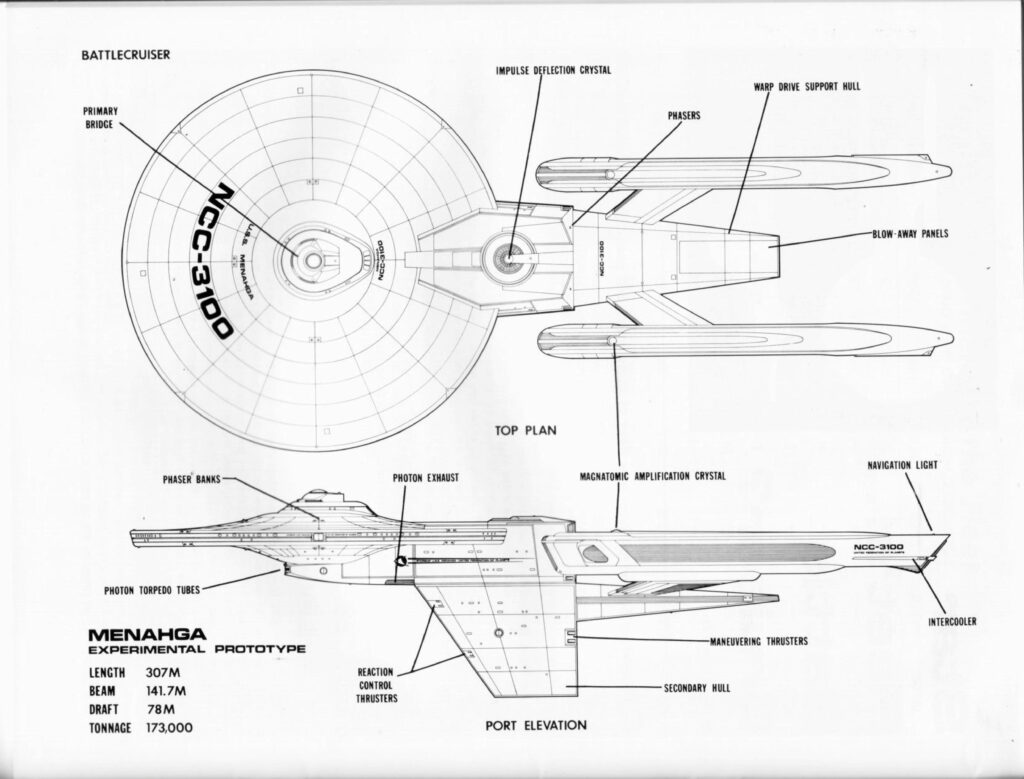
So for this post I present for you the Athabaska Class XII Cruiser, the Caracal Class XI Cruiser, the Citadel Class XII Cruiser, the Horizon Class VIII Cruiser and the Menagha Class XI Battlecruiser. Where I was random in the selection for the last post, I’m just taking them in order now to keep things simple.
Oh and just for a reference, here is a picture of the master book. Yes it’s thick and yes it has pages that haven’t been three-holed punched and added. You can see how worn this book is.
As you can tell from the title of this Blog of Holding, I am a big Doctor Who fan. I remember playing the Doctor Who Role Playing Game by FASA with my friends in the 90’s. I remember even running a game. However it has been a LONG time since I even looked at the rules that I hardly remember anything at all. So this entry into the Character Creation Challenge is almost like reading it again for the first time. Unfortunately there hasn’t been any opportunity to participate in an RPG session lately. One friend still uses the name of her Gallifreyan character as a nickname. Hi Agiani.
When this game was published, the Gallifreyans did not allow for interference in other worlds. This made The Doctor a bit of a renegade with the leaders of his people. To get around this in the game, characters could be Gallifreyans or companions participating in a group called the Celestial Intervention Agency (CIA). The agents in this rogue organization battle against the threats of Daleks, Cybermen and dozens other aggressive species across space and time.
Since I’ve never made a Time Lord character, the character that goes by the name The Barron. His birth name is Redbronovurudu, but that was too hard to pronounce by his Human companion. “Red what? Like Red Baron?” “Oh.. The Baron, I like that. It sounds very noble.”
There are six mental and physical attributes in the Doctor Who Role Playing Game. Strength (STR), Endurance (END), Dexterity (DEX), Charisma (CHA), Mentality (MNT) and Intuition (ITN). Attribute scores range from 1-30 (with 30 being the best) but they are also listed at Attribute Performance Levels. Level I is Handicapped. Level II is Untrained. Level III is Basic Performance. Level IV is Average Performance. Level V is Professional Performance. Level VI is Expert Performance and the last performance of Mastery is Level VII. Characters will also have Special Abilities and Skills. The skills, like Attributes, range 1-30 and have their own I-VII proficiency ratings from Unskilled to Mastery.
Your character’s initial attribute scores start at 6. To find out how many points are in your attribute point fund, roll 2d6+36. I ended up with 43 points to spend. The Baron was a Researcher in the Grand Library of Gallifrey before he unexpectedly found himself traveling the universe. So I gave him higher scores in the CHA, MNT and INT scores. They are as follows: ST: 10 (Level IV), END: 13 (Level IV), DEX: 10 (Level IV), CHA: 15 (Level V), MNT: 15 (Level V), INT: 16 (Level V). During the character creation process, a 3d6 die roll determines if your character has a special ability, and what it is if present. My roll ended up earning a Luck special ability. This added 5 to my INT making it 12 (Level VI). Endurance rates for health was quickly discovered and written down.
Like the FASA Star Trek Role Playing Game, there is a large number of skills used in the game. This skill system in the character creation process was… ugh. After reading through the books several times I finally just selected some skills I thought a brainy guy would have (with some skills he would have needed in the field without getting greedy) and not worry about points. This is probably a section that I would have needed an experienced GM to explain things to me. I then decided to wrap it up and scan the character sheet.
Afterthoughts:
The character creation process is explained in the middle of the Player’s Manual after they have explained the items that go into a character and a short story with play examples. The rules talks about selecting a race, but there are no stat adjustments for the two races playable in the game (Human or Gallifreyean).
The books kept switching between the use of INT and ITN. This must have slipped through the editing process.
The Game Operations Manual had a section on Judging Character Creation. I had to refer to it in order to get some of the numbers needed in the character creation process. The section for determining skills was needlessly complicated and it took several read through to understand it all (I think). I understood that skill points from one attribute would purchase more skills that fell under that attribute (Higher STR score made it easier to buy STR based skills), but the way it was processed was just overly complex. There could have been a better way to figure these out.
If I recall correctly, we used pre-generated characters when we played this game. After going through this process, I can see why. I think this is the first day I got frustrated and ended the process.
Additional Notes:
I’m still looking for more blogs or message boards of people participating in the Character Creation Process.
Star Trek: The Role Playing Game (note the space between role and playing in the name) by FASA was one of the first non-D&D games that I had the opportunity to play. I was introduced to the game at the tail end of it’s run by some friends in high school and I remember eagerly awaiting the latest release of the new books and supplements. Besides my Father’s introduction to Star Trek, the FASA game was one of the biggest influences in my Star Trek fandom. References from the FASA game continue to show up including season two of Star Trek: Discovery and the IDW Star Trek comics in 2020.
The FASA Star Trek Role Playing Game is based on a percentile (D100) system. I liked this type of statistics for a game based off of a franchise because another thing fans like to do is compare characters on the show (or even with other shows). While a lot of D&D characters could have a Strength of 16, it didn’t help much with the comparison side of the coin. Now if character A had a Strength of 55 and another had a Strength of 60, that would be close, but distinguished.
I decided to make a Human security officer named Lt. Bryant Wilson who will be serving in Starfleet during the time portrayed in the Original Series. While FASA had supplements that moved the game into the Star Trek Movies and the early days of The Next Generation, the primary focus was the Original Series with Kirk and Spock.
For the first five attributes of Strength, Endurance, Intelligence, Dexterity and Charisma, the player rolls 3d10 and adds 40 to the roll. The last two attributes, Luck and Psionic Potential, it was a straight percentile roll (D100). For Lt. Wilson I rolled the following stats. STR: 60 (rolled a 10+6+4). END: 60 (10+9+1), INT: 48 (3+3+2), DEX: 62 (10+7+5), CHA: 58 (10+5+3), LUC: 93 (whoa 93 on a percentile roll), PSI: 61 (again a percentile roll). The only racial modifiers for Humans is -30 to PSI which lowered this score to 31. In the RAW you roll another D100 and divide by two (rounding down). This roll was 23, which resulted in 11 bonus points. PSI cannot be increased and I am now allowed to put more than 30 in one attribute (no issue there). Most of my rolls were pretty good so I elected to put 5 points into STR and 4 points into END to help with his stats as a security officer (which brought both attributes up to 65 and 64) and the remaining 2 points going into INT (raising it to 50).
The next step was to pick my pre-academy skills. The number of points allowed was Lt. Wilson’s INT score divided by 10 and rounding down. So a total of 5. There were two categories to select from, Educational and Personal Development. I elected to put 3 points in General Medicine-First Aid (I figured he had to help in some capacity while growing up which may have led to his decision to join security) for Educational. From Personal Development I put 2 points into Streetwise. He had grown up living in a large North American city on the east coast. I randomly selected Baltimore.
At Starfleet Academy there were several skills that were learned as part of the curriculum in order to make a well rounded officer. I won’t list them all since they are in the rules, but I’ve added them to the character sheet. There were a few that I had to select the sub-skills. I selected Language-Orion, Life Sciences-Botany, Physical Sciences-Chemistry, Planetary Sciences-Meteorology, Space Sciences-Astrogation and Space Sciences-Astrophysics. I can select five outside electives at a rating of 10 each. Of these I selected Marksmanship-Archaic Weapon (Archery), Shuttlecraft Pilot, Negotiation/Diplomacy, Sports-Swimming and I added to my Streetwise (now up to 12). In my Advanced Study I get to add stats to the skills I already know. The number of stats I can improve is my INT score (50) divided by 10 (5) and add 5 which means I can roll a 1d10 and add that score to the skills I already know. I elected to add to Marksmanship Modern (rolled a 9, bumping this up to 29), Archery (+1 to 11), Negotiation/Diplomacy (+6 to 16), Computer Operation (+6 to 26), First Aid (+3 to 16), Zero-G Operations (+9 to 19), Federation Law (+7 to 22), Personal Weapons Technology (+10 (nice) to 15), Environmental Suit Operation (+1 to 11) and Personal Combat Unarmed (+4 to 24). I was done with the Academy Skills section.
Now onto the Branch School Skills. Luckily for the Security Branch School curriculum, it was pretty straight forward. Some new skills were added (such as Small Unit Tactics) and several had significant increases (+20 to Marksmanship, Modern) I added these skill points to my character sheet. There were two Outside Electives (any skill gets a 1d10) which I put into Carousing (rolled a 5) and Vehicle Operation-Hovercraft (rolled another 5). There was another round of Advanced Training. I could add a 1d10 to five skills I already knew. The Hovercraft skill got 6 (new total 11), Marksmanship Modern got 9 (new total 58), Small Unit Tactics got a 2 (new total 22), Damage Control Procedures got a 4 (new total 14) and Swimming got a 6 (new total 16). With that the Branch School was done.
Next was Bryant Wilson’s cadet cruise. It was a simple D100 roll with some modifiers for INT and LUC added (or subtracted). I rolled a 25 on the dice. My INT score didn’t alter anything, but since my luck was over 70, I took away 10 from the roll for a final of 15. This was exactly what was needed for a cadet cruise within the Exploration Command on a Constitution class starship. That high LUC really helped out. I marked that on my character sheet. The results of the cadet cruise was another D100 with additional modifiers. I rolled a 71, subtracted 20 for the cruise being on a Constitution Class and subtracted another 10 for the high LUC score for a grand total of 41. This resulted in Bryant Wilson passing his cadet cruise and earning the rank of Ensign. When I saw these results, I decided that Ensign Wilson had taken his cadet cruise on the USS Kongo.
After the cadet cruise, Ensign Wilson was sent to Department Head School which resulted in three things. Several new skills were added/gained (Administration, Computer Operation and Leadership), more Advanced Training. Five skills already known get a 1d10 advancement. These were Negotiation/Diplomacy got a 7 (new total 23), Small Unit Tactics got a 9 (new total 31), Marksmanship-Modern got a 4 (new total 62), Carousing got a 4 (new total 9) and Personal Combat Unarmed got a 5 (new total 49). The last thing earned was a rank advancement to Lieutenant (j.g.).
Next the RAW has Lt. (j.g.) Bryant Wilson going to Command Schools (there are a lot of schools in this game). I can select five skills and take the points listed. Well Starship Combat Strategy Tactics is a huge gain (40 points), Negotiation/Diplomacy is nice (another 10 for a total of 33), 10 more to Leadership (new total 40), Federation Law gets 10 (new total 37) and Federation Culture/History gets 5 (new total 20). Lt. (j.g.) Wilson has now been promoted to Lieutenant.
Now we get to determine the number of tours served. The eventual end goal is to make the character the Chief of Security on a starship. I was instructed to roll a 1d10 and divide by 2 (rounding down). The roll was a 7 resulting in three tours. My high LUC once again came in handing reducing the number of tours by 1. I needed to reach the rank of Lieutenant, so I didn’t need to add a tour for that requirement. However I need to add a tour for becoming a Department Head. The final total of tours needed would be three. If the game was going to be be held on a Constitution-class starship, there would have been one additional tour added. All the tours are determined by a D100 roll with modifiers.
The first tour rolled a 73, high LUC reduced this by 10 to 63. Wilson would be serving in the Merchant Marine Command (I decided he was serving onboard a Starfleet operated freighter known as the USS Whitlock). He must have done a good job because he ha a total Officer Efficiency Report of 15 (25 roll -10 for high LUC) which gave a rating of Excellent. The tour lasted 1 year (1d10 roll resulted in a 2, divided by 2 to get the one year) For serving in the Merchant Marines, I was able to add a 1d10 to either Carousing or Streetwise. I rolled a 4 that was added to Carousing (new total 13).
For the second tour I rolled another D100 and consulted the Tour Assignment Table. My Excellent rating gave me a -10 and my high LUC gave me another -10, so I rolled on the table for -10 to -20 (this way was set up that poor performances would not be rewarded with plumb assignments such as the coveted Constitution-class starships). I rolled a 42 (hey the answer to life, the universe and everything) which resulted in a tour within the Military Operations Command. I decided that Wilson was transferred to the USS Joan of Arc, a Larson class-destroyer. The tour lasted 3 years (1d10 roll resulted in a 7, divided by 2 and rounded down). For an Officer Efficiency Rating I rolled 41, modified by the high LUC to 31 resulting in As Expected.
The third tour rolled an 06 (Wow!) which consulting the table resulted in an assignment to a Constitution-class starship. That’s a feather in the cap for Wilson as he got to serve on the USS Constitution for three years (length roll on a 1d10 was a 7). There he earned an Officer Efficiency Rating of Excellent (roll of 35 minus 10 for the high LUC resulting in an OER of 25). This excellent rating is what probably got him noticed for his in-game assignment as the Chief of Security on the USS El Cid, an Anton-class cruiser.
Now these tours resulted in several skill increases. We already mentioned the Carousing from the Merchant Marine tour listed above. There was a total of seven years in service so one additional 1d10 can be added to skills already known for each two years (3 rolls total). Since at least two years was spent on a Constitution-Class, that adds another roll. High LUC scores again adding two additional rolls. So for the six rolls in total I added the following. Leadership gets a 10 (for a new total of 50). Small Unit Tactics gets a 3 (new total 34). Personal Combat Unarmed gets a 3 (new total 52), Security Procedures gets an 8 (new total 48). Zero-G Operations gets a 2 (new total 21) and Marksmanship-Modern gets a 9 (new total 71).
Lt. Wilson’s age is 33. He was 18 when we started the academy which took 4 years to complete. Half a year for the cadet cruise. 1.5 years for the branch school. A year each for department head school and command school and the three tours took 7 years.
Max Operating Endurance and Current Operating Endurance equals the END score. The Wound Heal Rate for Wilson is a 3 (END divided by 20, rounded down) and the Fatigue Heal Rate is 6 (END divided by 10, rounded down). Action Points came up as a 10 (DEX divided by 10, rounded down then add 4). The To-Hit Mod score is the average of the DEX score with the skill of Modern Marksmanship (62 added to 71 divided by 2 and rounded up = 67). To-Hit HTH (Hand to Hand) score is the average of the DEX (62) score with the skill of Personal Combat-Unarmed (52) which resulted in 57. Bare-hand damage is 1d10+3 due to his STR score of 65. Here is the final character:
Afterthoughts:
While discussing character creation for Star Trek Adventures, a friend stated that he preferred it over FASAs +5 to a skill here and +5 to a skill there. The FASA system was a little bit longer, but I felt that I could see the character forming before my eyes. Character creation would definitely have to be a session zero meeting between players and game master. If I was the GM for new players I’d also give them a little bit of leeway to go back and change some skills. In hindsight I should have given Lt. Wilson a skill in armed combat with sword or some unique weapon. I also like the Trivia catch all skill (even thought I didn’t use it on Wilson).
I also don’t know if I’m going to go into so much creation details on future entries. I need to pace myself if I’m going to make it through the 31 day challenge. I just get inspired to start typing and next thing I know I’m just continuing to type.
Additional Notes:
I’ve decided to start adding links to other blogs and message boards where players are participating in the Character Creation Challenge. I’ve had people ask if they can still participate if they didn’t start on January 1st. The answer yes, just pick up from today and move forward. If I don’t have your location linked, send me the URL. For social media (twitter, facebook, etc.) just use the hashtag of #CharacterCreationChallenge. I can’t link all social media sites, but I know they are coming up under that hashtag.
Also thank you to those who gave feedback to my Character Creation Challenge entry for Day 1. I had to go back and make a few minor corrections. I had been a while since I had created a character in the BECMI system.